

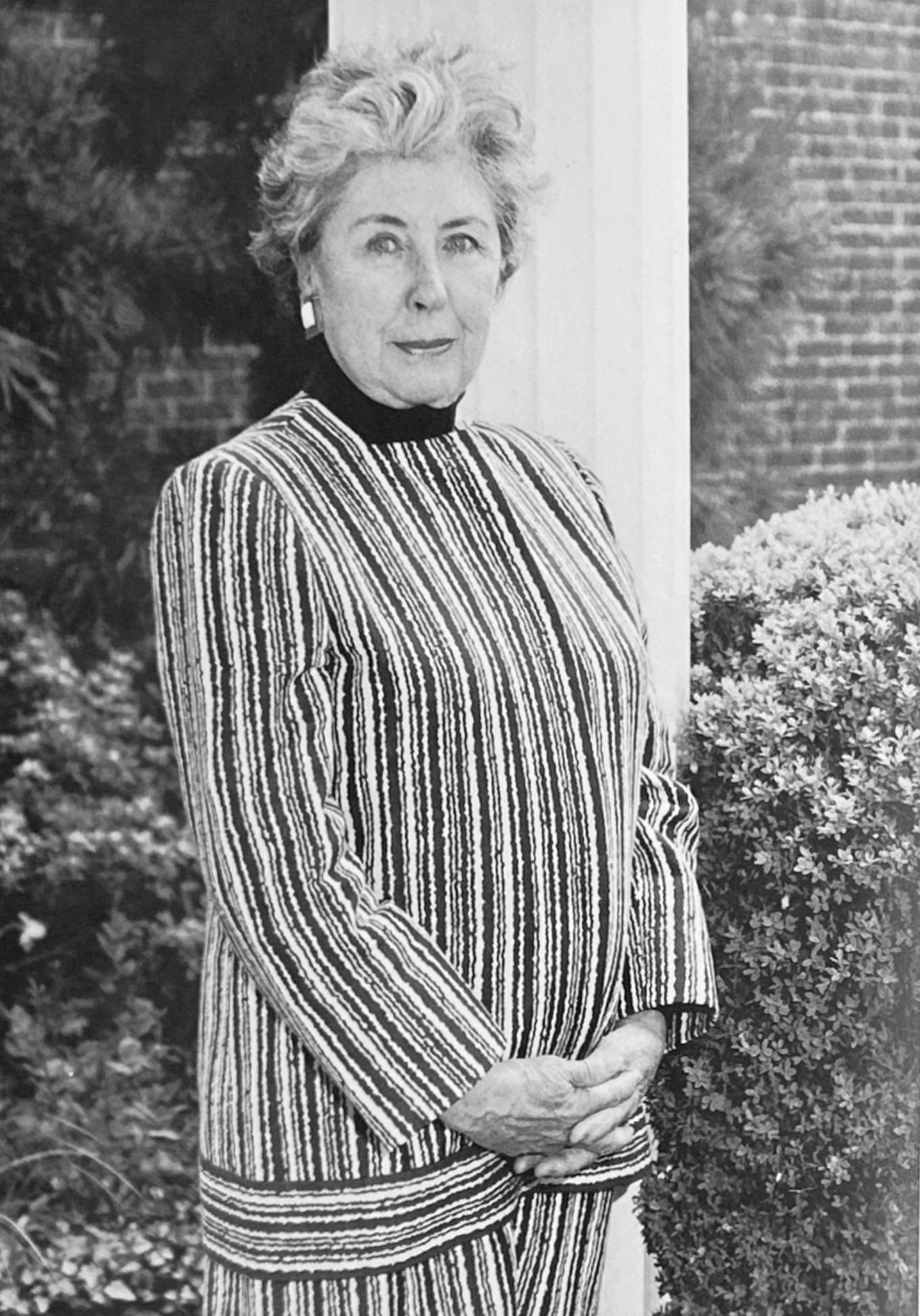
Margot Kelly · 1999 Honoree
Margot Kelly has the unconquerable spirit of someone who has lived both the “good life” and “life in the trenches.” The only child of a metallurgical engineer and his wife, she was born in Duseldorf, Germany and spent her childhood in Berlin surrounded by music, art, and antiques. War efforts, however, dominated Germany during Margot’s youth. As its build-up was slow, it had little negative impact on Margot’s family until 1942.
In school, Margot excelled in languages, especially English. After completing her baccalaureate, she was expected to become a member of the Hitler youth, which for girls usually meant going to a farm to work. Instead, her father got Margot placed as a secretary and she also continued to study English. In spite of the harrowing times, Margot’s family survived - even the Russians’ takeover of Berlin. Fortunately, they lived in what became the American sector and Margot was able to obtain a job in Frankfort. Margot says of those years, “You adapt to anything. It’s human nature, especially when you’re young.”
Margot arrived in northwest Washington with the German mission in 1950, and over time, carved herself a niche as a successful real estate agent in the Georgetown office of Millicent Chatel. While on phone duty in 1966, Margot received a call that opened a different world to the Chatel staff and to Margot. They got and sold a listing on East Capitol Street, then established their Hill office. On theHill, Margot found her new home.
Margot also found a new challenge -Barracks Row. Another agent told Margot that there was a wonderful bldg at 8th and G, SE. The building’s classical style, mixed-use, and size impressed her, so she bought it. Margot’s eye for art looked past the Bowery-like scene at street level. She could see the wonderful facade details of some of our oldest buildings juxtaposed against the dignity of the Marine Barracks. She knew they could and should be beautiful and vibrant again. Through that one corner building, Margot soon became the guardian of Barracks Row.
For thirty years, Margot spoke out at community meetings, testified before liquor control board hearings, and buttonholed people about trash, paint, broken glass. She weathered the riots. She organized owners and tenants; then reorganized them as the Barracks Row Business Alliance. In 1998, she initiated the 8th Street/Main Street project. Thanks largely to Margot Kelly’s spirit, fortitude, and vision Barracks Row is alive!